Why Substack?
My attempt to explain the inevitability of a paradigm shift parallel to widespread adoption of this technology

Hyperlink capable newsletter services such as substack have already supplanted academia as the legitimate nexus of scientific inquiry and human progress in some of the worlds greatest minds. As time moves forward, this supposition will predominate the soon-to-be archaic notion that a bureaucratic institution such as academia could have ever served such a purpose. Initially it will spread only within the minds of those individuals across the global population with the highest intersection of need for cognition and intelligence. These individuals are already rapidly developing ideas that are being distributed at the speed of war to other capable minds via market selection pressures. I would like to think that I am one of these individuals.
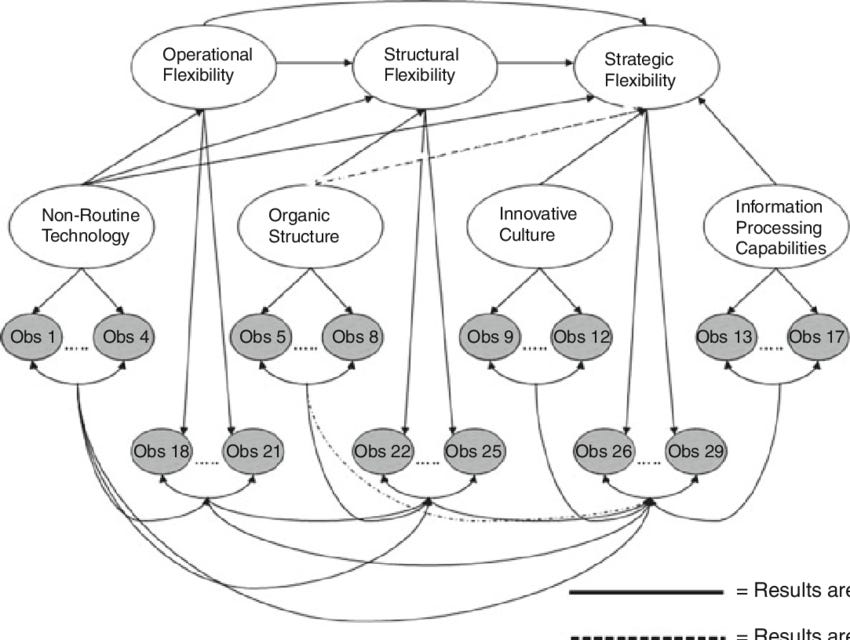
It is now the task of me and my ilk to leverage this technology to build complex, interwoven nomological networks that will ultimately communicate the information required for human civilization to reach its full potential into the minds of the many. I will attempt to offer a primer on what information I am referring to in a bid to accelerate the process.
There is only one value that we can all reasonably expect one another to hold: a respect for individual liberty. Since value is subjective, all other values necessarily vary greatly between individuals. There are, however, no individuals that can claim individual liberty is not worthy of respect whilst engaging in society without exposing deep, indefensible hypocrisy. In spite of the retarding influence of academia on the progression of human knowledge, we have at our fingertips an incredibly effective technique that allow us to engage with our own minds in an effort to enhance our performance and reach our ultimate potential. Although convergent evolution has undoubtedly produced other resources, the U.S. Army’s Master Resiliency Trainer (MRT) course provides the perfect tools to allow individuals to identify their own subjective values. Developing this self-awareness is critical as it allows us to apply reason and logic to the individual problem of how to ensure that your thoughts, values, emotions, and actions align and enable one to participate in society without hypocrisy. I hypothesize that regularly engaging in hypocrisy is toxic in the pursuit of optimal human performance. If true, this will supply consistent internal motivation to any wishing to participate in the forward march of civilization whilst punishing those who aim to place themselves in the position of a privileged elite while decrying individual liberty as a luxury unsuited to the unwashed masses. Given the intersection of these truths and the incentive structure embedded in this technology, it is inevitable that irrefutable arguments tailored to each individual political ideology (differences we have that stem from our subjective values) for why internalizing a deep commitment and respect for the sanctity of individual liberty will be developed, communicated, and adopted.
The ideological enemies of liberty will be compelled to destroy this contingency at all costs. We must not allow this to happen by continuing to engage in this process. While facing forthcoming threats to life, liberty, and property we must move to secure parallel platforms outside the sphere of influence of the big tech oligopoly and bad actors situated across various other institutions.
The previous centers for promoting the advancement of humanity towards the goal of reaching our full potential as a species are the same institutions that have long since abandoned this noble pursuit under the pressure of perverse incentives. Any astute observer has long since ascertained this fact, although I find eugyppius’ indictment of academia a particularly poignant example. As it stands the current and future hub facilitating the achievement of this agenda is substack. Welcome to the future teammate.
Hey Grant! You talk a little bit about academia in this post so I figured this would be a good place to ask this question. I have been thinking about pursuing a PhD in the exercise physiology realm at some point. However, while in grad school I've had the opportunity to get a better look (not the full picture) of academia. Something doesn't quite rub me the right way, but I'm not sure exactly what it is. A few possible candidates: some of the researchers (not most) seem petty and very full of themselves but I suppose you will find this in any vocation. The uncertainty of grant money and studying exactly what draws me to the field is also a bit off-putting. In the future, I can 100% see myself conducting research geared more towards receiving grant approval/publication rather than my true interests. The amount of hours spent preparing grants, conducting research, and publishing findings may not line up with the compensation that I am interested in. In terms of work hours and monetary gain I might as well go to law school and spend hours upon hours working in the legal field for (probably) better money. Although there are always private industry research groups. There is also the teaching side to consider. Working at a university would mean spending time lecturing to a crowd when in reality maybe 25% of the students are really interested. I wouldn't mind teaching but after a while I feel working with 18-22 year olds could take its toll. This isn't an exhaustive list of thoughts I've had but what is your input in regard to working in academia?